
Cheapest Way to Transport a Dog Across Country (2026)
GoGoPets Team ·
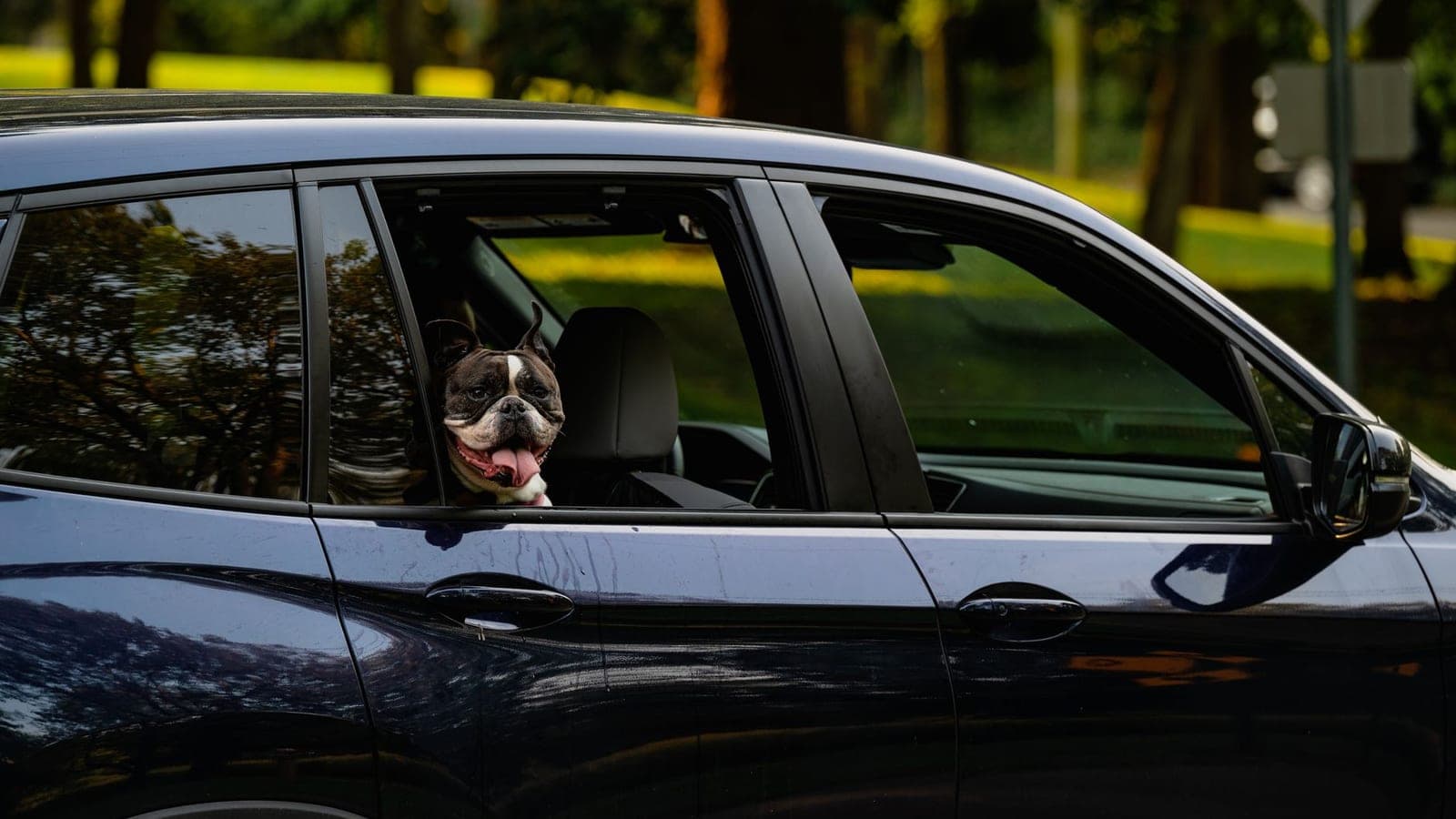
The cheapest way to transport a dog across country depends on your dog's size and how much of your own time you can spend. Small dogs fly in-cabin for $125–$150 each way; everyone else is choosing between driving yourself and a ground transporter at $0.50–$0.80 a mile.
Every way to move a dog across the country, ranked by cost
The cheapest way to transport a dog across country is to fly with it in the cabin if it weighs under about 20 pounds with the carrier: $125–$150 each way on the major airlines. If your dog is bigger than that, the real choice is driving it yourself for roughly $900–$1,500 in gas, hotels, and food, or hiring a ground transporter, which runs $900–$1,400+ coast to coast on GoGoPets. Amtrak and buses are almost never an option for a cross-country dog trip.
Here is the full comparison for a typical 2,800-mile trip like New York to Los Angeles. Costs are one-way. Airline fees come from the carriers' published 2026 pet policies; ground rates come from the GoGoPets rate tiers and the $0.50–$1.60 per mile range you see across the industry.
Read the table with your dog's weight in mind. Under 20 pounds, you have four real options. Over 20 pounds, you have two. Over about 100 pounds, or if you own a snub-nosed breed most airlines refuse to fly, you have one: the ground.
| Method | Typical cost (2,800 mi) | Trip time | Weight limit | Best for |
|---|---|---|---|---|
| Drive yourself | $900–$1,500 plus 4–5 days off work | 4–5 days | None | Owners already relocating by car |
| Fly in-cabin | $125–$150 pet fee plus your ticket | 6–8 hours | About 20 lb with carrier | Small dogs, owners flying anyway |
| Fly as cargo / flight nanny | $300–$1,000 cargo; $1,000–$2,000 with a nanny | 1 day | Airline-specific; snub-nosed breeds often banned | Medium dogs on airlines that still take cargo pets |
| Amtrak | $26 per segment | Not possible over 7 hours | 20 lb with carrier | Short regional hops only |
| Greyhound / intercity bus | Not allowed | N/A | Service animals only | Nobody with a pet |
| Ground transporter (GoGoPets) | $900–$1,400+ all-in | 4–5 days | None | Large, senior, anxious, or brachycephalic dogs |
Driving yourself: the hidden costs of taking a dog across country
Driving looks free because there is no invoice. Add it up and it rarely is. A 2,800-mile drive in a car getting 25 mpg burns about 112 gallons of fuel, which is $350–$450 at typical 2026 prices. Then add three or four nights in pet-friendly hotels, which usually charge $20–$75 per night in pet fees on top of the room. Food on the road for you adds $40–$60 a day.
The number people forget is the return. If you are moving, you keep the car and the cost ends there. If you are just delivering the dog, you need a flight or train home, plus the days off work in both directions. Four days of unpaid time or burned vacation is often the largest line item.
Driving makes the most sense when you are relocating anyway and have room in the car. It makes the least sense when you would otherwise fly, when you have more than one vehicle to move, or when your dog gets carsick and you are the only driver. In those cases a door-to-door dog transporter often costs about the same and hands you back a week of your life.
Get a free estimate for your specific route — verified drivers compete for your trip.
Get Instant Estimate →Amtrak and bus: why they rarely work for dogs
Amtrak's pet policy allows dogs and cats up to 20 pounds including the carrier, on trips of seven hours or less, for a $26 fee per segment. The carrier has to fit under your seat and the dog has to stay in it. That works for Philadelphia to Washington. It does not work for anything you would call cross-country, because there is no way to string seven-hour segments together without breaking the rule at each connection.
The bus is simpler: Greyhound's onboard rules allow trained service animals only. No pets in carriers, no emotional support animals. Regional bus lines follow the same policy almost without exception. If you were hoping the bus was the cheapest way to ship a dog, it is not an option at all.
The one train trick that does work is combining Amtrak with a short car ride for a small dog on a regional move, say Boston to New York. For anything longer, cross Amtrak off the list and compare flying, driving, and ground transport.
Flying: in-cabin, cargo, and flight nanny prices
In-cabin is the cheap option, and only for small dogs. American, Delta, and United each charge $150 per segment for a pet in the cabin in 2026, and Southwest charges $125. The dog must ride in a soft carrier under the seat, which in practice caps it around 20 pounds. A connecting itinerary doubles the fee on the carriers that charge per segment.
Cargo is where flying gets expensive and complicated. United ended its PetSafe program in 2018 and does not accept unaccompanied pets. Delta Cargo currently accepts pets only for active military and State Department personnel on orders. That leaves fewer carriers, summer heat embargoes, and airline breed bans on snub-nosed dogs like French bulldogs and pugs. Expect $300–$1,000 in cargo fees plus a compliant crate and a health certificate.
A flight nanny flies your dog in-cabin as their own pet, so it is still limited to small dogs. The nanny fee is typically $300–$700, and you also pay their airfare, which pushes most quotes to $1,000–$2,000. For a full breakdown of when the sky beats the road, read our comparison of ground vs air pet transport.
Professional ground transport: cost per mile and what drives it
Ground pet transport is priced by the mile, and the rate drops as the trip gets longer. Across the industry you will see quotes from $0.50 to $1.60 per mile. On GoGoPets, drivers bid using published tiers: $0.80 per mile under 750 miles, $0.70 for 751–1,250, $0.60 for 1,251–1,550, $0.55 for 1,551–2,050, $0.50 for 2,051–3,000, and $0.44 for 3,001–3,600 miles, with a $250 trip minimum.
A 2,800-mile New York to Los Angeles trip therefore bids around $1,400 from the driver, plus the flat $99 GoGoPets service fee. A 1,000-mile trip usually lands at $650–$850 all-in. Short routes under 300 miles run $299–$450. The average completed trip on the platform is about $680. Our full pet transportation cost guide breaks these numbers out by route.
What pushes a bid up: short notice, two or more dogs, a giant breed that needs a bigger vehicle, and special care such as medication or an elderly dog who needs slower days. What pulls it down: flexible dates, a busy corridor where many drivers already run, and a standard-size dog in a standard crate.
Marketplace bidding vs flat-rate companies
There are two ways to buy ground transport. A flat-rate company gives you one number, sets its own schedule, and often loads several customers' pets into one van to make the route pay. That can be cheaper per dog, but your dog shares the vehicle and the timeline with strangers' animals, and the pickup window can be days wide.
A marketplace works the other way around. You post the trip for free, verified drivers submit competing bids, and you pick the one you like based on price, reviews, and vehicle. On GoGoPets your dog rides alone with its driver in a climate-controlled vehicle, never in a shared van. Payment sits in escrow: 30% is released at pickup and 70% only after you confirm safe delivery.
The practical difference is control. You see 142 verified drivers with a 4.8 average rating rather than one dispatcher's promise, you message the driver directly, and you get photo updates from the road. If a cheap flat-rate quote sounds too good, ask how many other pets will be in the van and how long the route detours to collect them.
How to lower your ground transport quote
You cannot change the mileage, but you can change almost everything else that goes into a bid. Drivers price risk and dead miles, so anything that makes your trip easier to fit into their week lowers the number. These are the levers that actually move the price, roughly in order of how much they save.
- Post 2–3 weeks ahead so more drivers see the trip and compete on price.
- Give a pickup window of a few days instead of one fixed date.
- Stick to busy corridors. Check the pet transport routes drivers already run; a driver returning empty along your route will bid low.
- Choose the $99 standard service fee unless you need the $299 Concierge tier.
- Supply your own crate, bedding, food, and paperwork so the driver has nothing to source.
- Ask drivers whether a slightly different pickup or delivery city fits a trip they already have booked.
- Book one long trip instead of two short ones; the per-mile rate drops on every tier.
Which option is cheapest for your dog's size and route
Under 20 pounds and you are flying anyway: in-cabin, $125–$150. Nothing beats it. Under 20 pounds and you are not flying: a flight nanny at $1,000–$2,000 or ground transport at $900–$1,400+; ground usually wins on a coast-to-coast run and always wins if your dog is a French bulldog, pug, or another breed the airlines refuse.
Over 20 pounds and you are driving your own car to the new place: drive the dog, budget $900–$1,500 and four or five days. Over 20 pounds and you are not driving: a ground transporter is the cheapest way to ship a dog that size, and on the New York to California pet transport route it typically finishes in four to five days door to door.
If ground transport is your answer, the next step takes five minutes. Post the trip on GoGoPets, compare the bids that come in, and pick your driver. Your payment stays in escrow until your dog is home, and pet protection is included on every trip at no extra cost.
Frequently Asked Questions
What is the cheapest way to transport a dog long distance?
For a dog under about 20 pounds, flying in the cabin is cheapest at $125–$150 each way on the major U.S. airlines. For larger dogs, the cheapest realistic options are driving yourself (roughly $900–$1,500 in gas, hotels, and food for a coast-to-coast trip) or a ground transporter, which runs $900–$1,400+ cross-country on GoGoPets.
Can I take my dog on Amtrak or a Greyhound bus?
Amtrak allows dogs and cats up to 20 pounds including the carrier on trips of seven hours or less, for $26 per segment, under its published pet policy. That rules out cross-country trips. Greyhound allows trained service animals only; pets in carriers and emotional support animals are not permitted on board.
How much does it cost to ship a dog across the country?
Ground transport across the country typically costs $900–$1,400+ on GoGoPets, including the $99 service fee. A 2,800-mile trip bids around $1,400 from the driver at the $0.50 per mile tier. Air cargo runs $300–$1,000 in fees plus crate and paperwork, and a flight nanny usually totals $1,000–$2,000.
Is it cheaper to drive or ship a dog?
Driving is cheaper only if you are relocating by car anyway. Once you add hotels with pet fees, fuel for 2,800 miles, meals, a return flight, and four or five days off work, driving a dog one-way costs about the same as a ground transporter. Shipping wins when your time has value or you have more than one vehicle to move.
How much do pet transporters charge per mile?
Industry quotes range from $0.50 to $1.60 per mile, with shorter trips priced higher per mile. GoGoPets drivers bid on published tiers that fall from $0.80 per mile under 750 miles to $0.50 per mile for 2,051–3,000 miles, with a $250 minimum. The owner adds a flat $99 service fee per trip.
Can I send my dog on a plane by itself?
Only on the few airlines that still accept unaccompanied pets as cargo. United ended its PetSafe program in 2018, and Delta Cargo currently accepts pets only from military and State Department travelers on orders. Cargo also comes with heat embargoes and breed bans on snub-nosed dogs, which is why most solo dog trips now go by ground.
Ready to Transport Your Pet?
Post your trip for free and receive competitive bids from verified, USDA-certified drivers. Pet protection included on every booking.
Get a Free Quote for Your Trip→