
Ground vs Air Pet Transport: Which Is Better for Your Dog?
GoGoPets Team ·
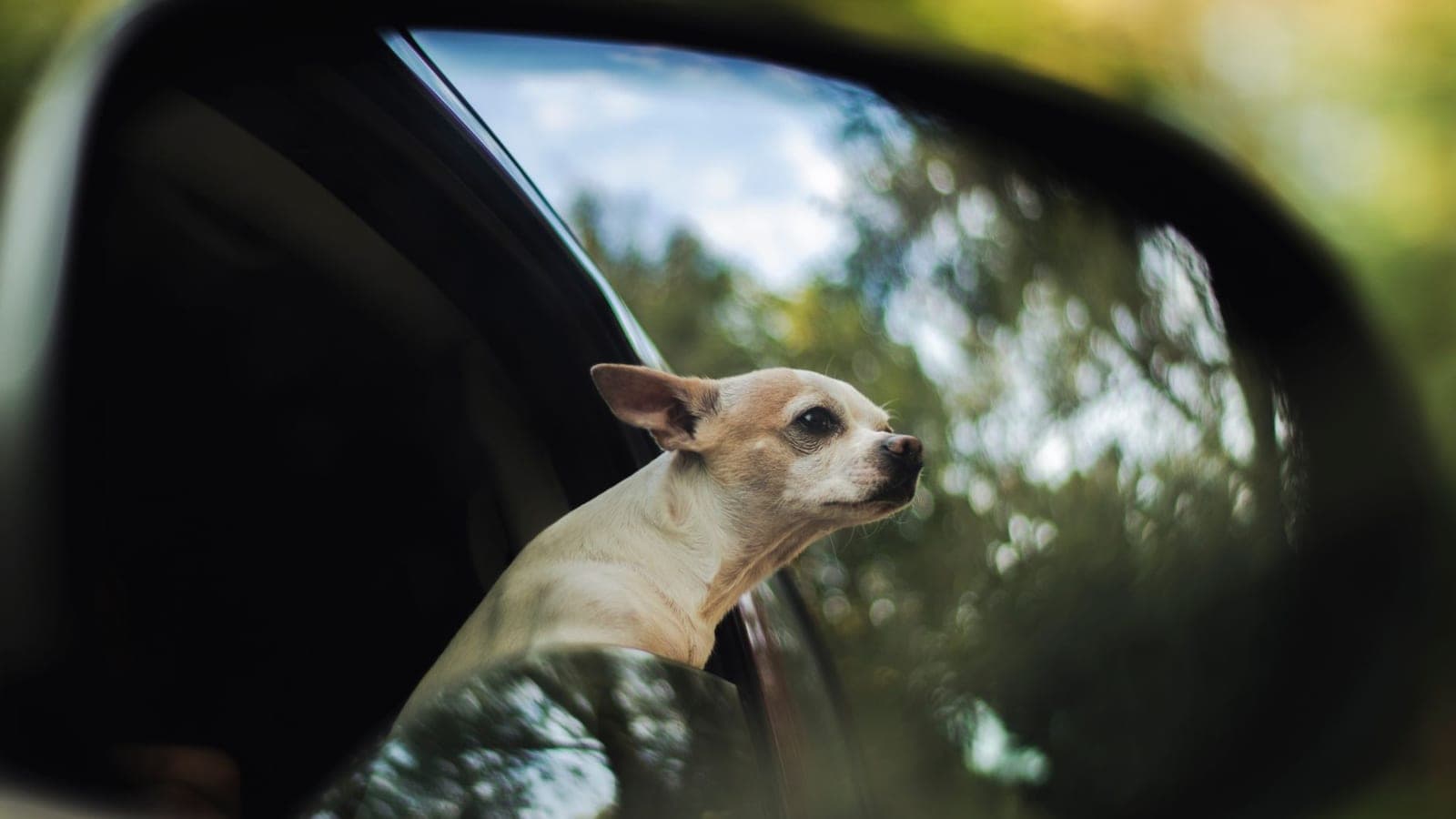
Ground vs air pet transport comes down to whether your pet can legally fly, how far it is going, and how much handling you want it to go through. For dogs over 20 pounds, snub-nosed breeds, seniors, and anxious pets, ground wins; air wins for a small pet under your seat or a move across an ocean.
Ground vs air pet transport: which one should you pick?
Ground vs air pet transport comes down to three questions: can your pet legally fly, how far is the trip, and how much handling do you want your pet to go through. For most dogs over about 20 pounds, every snub-nosed breed, seniors, and anxious animals, ground transport is the better answer. Air wins when you have a small pet that fits under an airline seat and you are on that flight yourself, or when the trip crosses an ocean.
The reason is simple. In-cabin flying is cheap and quick but capped at roughly 20 pounds including the carrier. Anything bigger has to ride as cargo, and cargo is where the breed bans, temperature embargoes, crate rules, and airport handling all live. Ground transport has none of those restrictions: a driver picks your pet up at your door and delivers it to the new one.
Here is the full side-by-side. Air figures are typical ranges drawn from the major U.S. carriers' published pet policies, and ground figures come from the GoGoPets rate tiers. Read it with your pet's weight and breed in mind, because those two facts decide most of the rows.
| Factor | Ground (GoGoPets, door to door) | Air, in-cabin | Air, cargo |
|---|---|---|---|
| Cost | $299–$450 under 300 mi; $650–$850 for 1,000 mi; $900–$1,400+ coast to coast | About $125–$150 per flight segment plus your own ticket | Typically $300–$1,000 plus an approved crate and vet paperwork |
| Trip time | Same day under 300 mi; about 2 days for 1,000 mi; 4–5 days coast to coast | Flight time plus airport time, usually one day | One day, but cargo drop-off and pickup add hours on each end |
| Breed restrictions | None | Weight only, about 20 lb with carrier | Snub-nosed breeds barred by most carriers; seasonal heat and cold embargoes |
| Stress and handling | Alone with one driver in a climate-controlled vehicle, with stops for water and walks | Under the seat, with you, no cargo hold | Crated for the full trip, ramp and hold exposure, no walks |
| Paperwork | Health certificate where the destination state requires it | Airline pet reservation; health certificate on some carriers | Health certificate usually dated within 10 days, crate compliance, acclimation letter on some carriers |
| Updates during the trip | Photo updates and direct messaging with the driver | You are there | Status at drop-off and pickup only |
| Best for | Dogs over 20 lb, snub-nosed breeds, seniors, cats, anxious pets | Small pets whose owner is on the same flight | Healthy, crate-trained medium dogs on carriers that still accept them |
How much does ground pet transport cost vs shipping a dog by air?
Ground pet transport on GoGoPets is priced per mile, and the rate falls as the trip gets longer. Drivers bid on published tiers: $0.80 per mile under 750 miles, $0.70 for 751–1,250, $0.60 for 1,251–1,550, $0.55 for 1,551–2,050, $0.50 for 2,051–3,000, and $0.44 beyond that, with a $250 trip minimum. You add a flat $99 service fee, or $299 for Concierge, once per trip.
In practice a short route under 300 miles lands at $299–$450, a 1,000-mile trip usually runs $650–$850 all-in, and coast to coast is $900–$1,400+. The average completed trip on the platform is about $680. On the New York to Miami pet transport route, roughly 1,280 miles, a driver bid at the $0.60 tier comes to about $770, so around $870 with the standard fee.
Shipping a dog by air costs more or less than ground depending on one thing: whether the dog qualifies for the cabin. In-cabin pet fees on the major U.S. carriers are typically $125–$150 per flight segment, on top of your own ticket. Cargo, for dogs too big for the cabin, typically runs $300–$1,000 in airline fees, plus an approved crate, a vet visit for the health certificate, and the drive to and from the cargo facility on both ends.
So for a small dog whose owner is flying anyway, air is cheaper by hundreds of dollars. For everyone else, ground and cargo overlap on price, and ground removes the crate, the cargo facility, and the vet-within-10-days scramble. Our pet transportation cost guide breaks the ground numbers out by route length.
Get a free estimate for your specific route — verified drivers compete for your trip.
Get Instant Estimate →Is it better to fly or drive a dog? Distance and timing breakpoints
The ground pet transport vs flying question is mostly a distance question. Under 300 miles, driving wins outright. A ground driver does it the same day for $299–$450, and no airline trip is faster once you count getting to the airport, checking in with a pet, and collecting it at the other end. Nobody should put a dog in a cargo hold for a 250-mile hop.
Between 300 and 1,000 miles, ground takes one to two days and air takes most of one day. The time gap is real but small, and ground is the only choice for anything that cannot fly. If the dog is small, healthy, and you are flying too, in-cabin is a fair option in this range.
Over 1,000 miles is where people assume air must win, and on the calendar it does: four to five days by road against one day by plane. But the plane day is a long one for a cargo dog, often 10 to 14 hours crated from drop-off to pickup with no walk in between. The road days include stops for water, food, and exercise every few hours. Slower is not the same as harder on the dog.
Which pets can't fly? Breed, age, and health restrictions
Most U.S. airlines' pet policies bar brachycephalic (snub-nosed) breeds from cargo because their short airways make it harder to breathe and cool down under stress. That list generally includes French bulldogs, English bulldogs, pugs, Boston terriers, Shih Tzus, Pekingese, boxers, and Cavalier King Charles spaniels, along with Persian, Himalayan, and exotic shorthair cats.
Temperature is the next filter. Under the airlines' seasonal embargo rules, cargo pets are refused when forecast temperatures at any airport on the route are too hot or too cold, commonly above the mid-80s Fahrenheit or below the mid-40s depending on the carrier. In practice that closes cargo on many southern routes for the whole summer. Some carriers have stopped accepting unaccompanied pets in cargo altogether.
Age and health matter too. USDA Animal Welfare Act rules require dogs and cats to be at least eight weeks old before commercial shipment. The AVMA advises owners to weigh carefully whether air travel is necessary for snub-nosed dogs and notes that animals with underlying health problems face greater risk in flight. Seniors with heart or breathing conditions, and any pet on sedatives, usually should not fly cargo.
None of these restrictions apply to a car. A brachycephalic dog transport trip by ground is routine: the driver keeps the vehicle cool, watches for heavy panting, and stops as needed. That is why so many bulldog and pug owners never seriously consider the plane.
Pet air cargo vs ground: how do stress and handling differ?
Air cargo is a chain of handoffs. You leave your dog with a cargo agent, usually two to four hours before departure. It waits in a holding area, is moved to the ramp, loaded into the hold, and the process runs in reverse at the destination. Add a layover and it repeats in the middle. Your dog stays crated the entire time, and no one in that chain knows your dog.
The hold is pressurized and heated, but the ramp during loading and delays is not, which is why the temperature embargoes exist. Noise, darkness, and no familiar person nearby are what animal-welfare groups point to when they describe cargo stress, and why the AVMA advises flying at-risk animals only when necessary.
Ground transport is one handoff. A single driver picks your pet up at your door and stays with it until it reaches the destination. On GoGoPets your pet never shares the vehicle with other customers' animals, the cabin is climate-controlled, and the driver stops regularly for water, food, and bathroom breaks. Riding in a car is also something almost every dog has done before; a cargo hold is not.
Handling matters for cats as much as dogs. A cat in cargo cannot be reassured or checked on for the entire trip, which is why owners moving cats long distances usually favor cat transportation by ground, where the carrier can be covered, the car kept quiet, and the litter box reachable at stops.
What does door-to-door ground pet transport actually remove?
The phrase door to door hides how much of a flight is not the flight. A cargo trip means buying an airline-approved crate, getting a health certificate inside the airline's window, driving to the airport's cargo facility during its operating hours, and having someone with the right paperwork do the same at the other end. A connection adds layover time and a second loading cycle.
Ground transport replaces all of it with a pickup at your address and a delivery at the destination address. There is no cargo facility, no hold, no layover, and no one waiting in a parking lot for a delayed flight. The driver brings your pet to the door, whether that is a new apartment, a breeder, or a family member's house.
You are also not the one driving. That is the difference between hiring a dog ground transport service and doing a five-day road trip yourself with hotels, pet fees, and a return flight. For the full picture of what a driver handles, see door-to-door pet transportation.
How do bidding, escrow, and updates work on GoGoPets?
GoGoPets is a marketplace, not a single transport company. You post your trip in the free app with pickup and delivery addresses, dates, and details about your pet. Verified drivers then submit competing bids, and you pick the one you want based on price, reviews, and vehicle. There are 504 verified drivers on the platform covering all 50 states, with a 4.8 average rating.
Every driver has passed a background check, ID verification, and insurance screening, and USDA Animal Care licensed drivers are marked in the app. Drivers keep 100% of their bid and pay no membership fee; you pay the $99 service fee separately.
Your payment goes into escrow. 30% is released to the driver at pickup and the remaining 70% only after you confirm safe delivery. If a trip cannot be completed, you are refunded per the refund policy, and pet protection coverage is included on every trip at no extra cost. During the trip the driver sends photo updates from the road and you can message them directly in the app.
When should you choose air anyway?
Ground is the default for most pets, but there are real cases where flying is the right call. Run through this list before you post a trip; if one of these fits your situation, book the flight and skip the road.
- Your pet weighs under about 20 pounds with its carrier and you are on the same flight, so it rides under your seat and never leaves you.
- The trip crosses an ocean or a border. International moves and Hawaii need an airline; ground transport covers the road-connected states.
- You have a hard deadline in the next day or two, a healthy, crate-trained, non-brachycephalic dog, and a carrier that still accepts cargo pets on that route in the current season.
- The pet is a seasoned flyer that stays calm in unfamiliar settings, and the itinerary is nonstop with no layover and mild weather at both ends.
- Budget is the only constraint, the pet is small, and you were already buying the plane ticket.
How do you decide? A simple framework
Start with eligibility. If your pet is a snub-nosed breed, over the in-cabin weight limit, under eight weeks, elderly, or has any breathing or heart issue, air cargo is off the table and the decision is already made. That covers most people searching for this comparison.
Next, distance and your own travel. Under 300 miles, go by ground. If you are flying with a small pet, take it in-cabin. If you are not flying, or the pet cannot ride in the cabin, compare a ground bid against cargo fees plus crate, paperwork, and cargo-facility runs; ground usually costs about the same and removes every one of those steps.
Finally, weigh handling. One driver in a climate-controlled car versus a chain of strangers and a cargo hold is the tradeoff that matters most to owners, more than a few days on the calendar. If that is where you land, post the trip on GoGoPets, compare the bids, and choose your driver. Your payment stays in escrow until your pet is delivered, and you will have photos from the road the whole way.
Frequently Asked Questions
Is it better to fly or drive a dog long distance?
For most dogs, driving with a professional ground transporter is better: no breed bans, no cargo hold, no temperature embargoes, and the dog rides with one driver who stops for water and walks. Flying wins only for a small dog that fits under your seat on a flight you are taking anyway, or for a move across an ocean.
How much does shipping a dog by air cost?
In-cabin pet fees on the major U.S. airlines are typically $125–$150 per flight segment, plus your own ticket, for dogs under about 20 pounds with the carrier. Cargo for larger dogs typically runs $300–$1,000 in airline fees, plus an approved crate, a health certificate, and transport to and from the cargo facility. A flight nanny usually totals $1,000–$2,000.
Is ground pet transport safer than flying?
Ground transport removes the risks specific to air cargo: ramp temperature exposure, pressure changes, rough handling, and long hours crated without a break. The AVMA advises owners to consider carefully whether air travel is necessary for snub-nosed breeds and animals with health problems. For those pets, and for anxious dogs, ground is the lower-stress option.
How long does ground pet transport take compared to flying?
Ground transport typically takes the same day for trips under 300 miles, about two days for 1,000 miles, and four to five days coast to coast, with regular stops along the way. Flying takes one day, but a cargo dog is often crated 10 to 14 hours from drop-off to pickup, and seasonal embargoes or cargo-facility hours can add days of waiting.
Which dogs are not allowed to fly?
Most U.S. airlines bar snub-nosed breeds from cargo under their pet policies, including French bulldogs, English bulldogs, pugs, Boston terriers, Shih Tzus, Pekingese, boxers, and Cavalier King Charles spaniels. Dogs over the in-cabin limit of about 20 pounds cannot fly in the cabin, and puppies under eight weeks cannot be shipped commercially under USDA rules.
What paperwork do I need for ground vs air pet transport?
For ground transport, most states require a health certificate from your vet for a dog or cat crossing state lines; the driver carries it and nothing else is needed. For air cargo, airlines usually require a health certificate dated within 10 days of departure, an airline-approved crate, and on some carriers an acclimation letter for cold-weather travel. Check your destination state's agriculture department for current rules.
Ready to Transport Your Pet?
Post your trip for free and receive competitive bids from verified, USDA-certified drivers. Pet protection included on every booking.
Get a Free Quote for Your Trip→