
How to Transport a Large Dog Across Country (Too Big to Fly)
GoGoPets Team ·
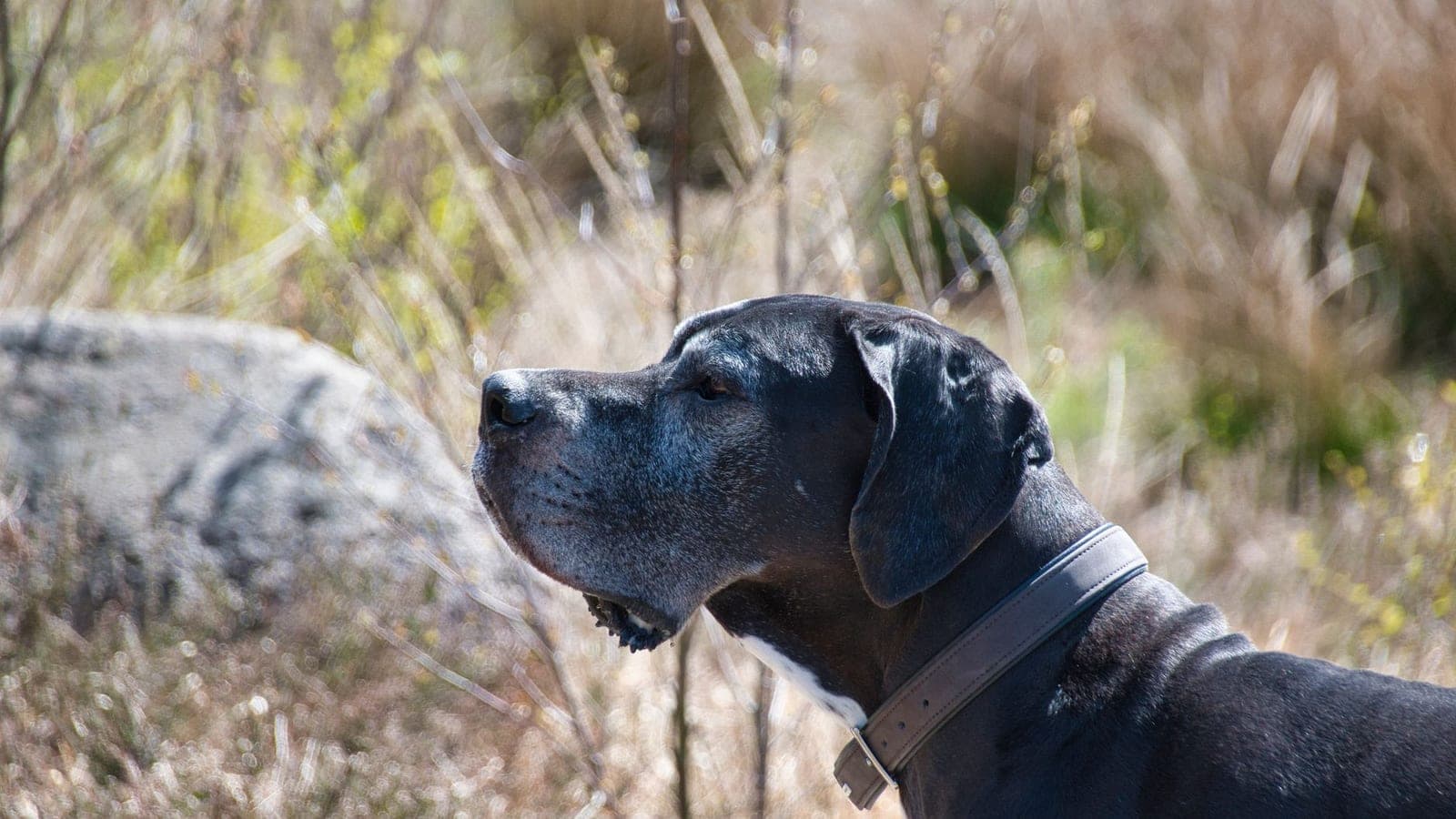
Figuring out how to transport a large dog across country usually starts with an airline saying no. Once a dog and crate pass 150 pounds, cargo is off the table on the carriers that still take pets. Here is the ground plan: crate sizing, vehicle questions, bloat prevention, and cost.
How to transport a large dog across country when airlines say no
Here is how to transport a large dog across country in three steps. Get a health certificate from your vet within 10 days of departure. Buy or borrow a crate the dog can stand, turn, and lie fully stretched in. Then book a ground transport driver whose vehicle fits that crate, because for most dogs over 100 pounds, the airlines are not an option.
The airline problem is about weight and kennel size, not temperament. Alaska Air Cargo, one of the few US carriers still running a pet cargo program, caps the dog plus kennel at 150 pounds combined. A 140-pound Great Dane in a 40-pound crate is over the limit before you check a single box. Several other major US airlines have paused or restricted pets in cargo entirely since 2020.
Breed lists add a second wall. Mastiff-type breeds, including Bullmastiffs, Cane Corsos, and Dogues de Bordeaux, appear on many airlines' short-nosed restricted lists alongside Bulldogs and Pugs. If your dog is on one of those lists, the weight cap does not even matter. Our post on brachycephalic dog transport covers the breathing risk behind those rules.
So ground transport is the default for giant breeds, and it is not a consolation prize. A dog that rides in a climate-controlled vehicle with a driver who stops every few hours has a better trip than one in a cargo hold. The rest of this guide is how to do it right.
Ground transport: the default for Great Danes, Mastiffs, Saint Bernards, and Newfoundlands
Every giant breed can travel by ground. The constraints are practical: the crate has to fit in the vehicle, the dog has to be able to get in and out without hurting its hips, and the driver has to be able to handle a dog that may outweigh them. Experienced large-dog drivers solve all three routinely.
The table below lists the common giant breeds with typical adult weights, the crate size they usually need, and their status on the airlines that still carry pets in cargo. Weights are typical adult ranges from breed standards, not limits. Crate sizes are the standard retail designations; measure your own dog before buying.
| Breed | Typical adult weight | Minimum crate size (typical) | Airline cargo status |
|---|---|---|---|
| Great Dane | 110–175 lb | 48–54 in (giant / custom) | Usually over the 150 lb combined cap |
| English Mastiff | 160–230 lb | 54 in (custom) | Over the weight cap; on many short-nosed lists |
| Saint Bernard | 120–180 lb | 48–54 in | Usually over the weight cap |
| Newfoundland | 100–150 lb | 48 in | Borderline; depends on crate weight |
| Cane Corso | 90–110 lb | 42–48 in | Restricted as a short-nosed breed on several carriers |
| Rottweiler | 80–135 lb | 42–48 in | Often allowed if under the cap; check breed lists |
| German Shepherd | 50–90 lb | 42 in | Allowed on carriers that still ship pets in cargo |
Get a free estimate for your specific route — verified drivers compete for your trip.
Get Instant Estimate →Giant breed crate size for travel: stand, turn, lie fully stretched
The rule comes from the International Air Transport Association container standard, and USDA Animal Welfare Act transport rules say the same thing: the dog must be able to stand without touching the top, turn around, and lie down in a natural position. For ground transport there is no inspector at the door, but the rule still defines a safe crate, and every experienced driver will hold you to it.
Measure four things with the dog standing. Nose to base of tail (length). Floor to top of head or ear tips, whichever is higher (height). Widest point of the shoulders (width). Floor to elbow (used for the airline formula). Add 4 inches to length and height for a comfortable fit. A 36-inch-long Great Dane needs a crate at least 40 inches long inside, which usually means a 48-inch crate.
Retail crates top out at 48 inches for most brands, with a few 54-inch models. Dogs over about 150 pounds often need a custom-built plywood or aluminum crate, or a driver who runs a built-in kennel system. Wire crates are fine for a car but flex on rough roads; a plastic or aluminum crate is sturdier for a multi-day trip.
Some drivers transport giant breeds uncrated in a partitioned cargo area or with a crash-tested harness on a bench seat. That can work for a calm, well-trained dog. Ask what the driver uses and why. The wrong answer is a loose 150-pound dog in a vehicle at highway speed.
Vehicle requirements: what to ask a driver about cargo space
A 48-inch crate is roughly 48 by 32 by 35 inches. It fits in a full-size SUV with the third row down, most minivans with the rear seats removed or stowed, and any cargo van. It does not fit in a compact SUV or a sedan. A 54-inch crate needs a van or a truck with a cap. Ask for the vehicle make and model and check the cargo dimensions yourself.
Floor height matters as much as floor space. A Great Dane with hip dysplasia cannot jump into a vehicle whose floor sits 30 inches off the ground, and a driver cannot lift one. Ask whether the driver carries a ramp rated for the dog's weight, or plan to send your own. A minivan's low floor is a real advantage for giant breeds.
Then ask about climate control in the cargo area. Rear air conditioning vents make a difference for a dog with a thick coat like a Newfoundland or Saint Bernard, which overheat before smaller dogs do. GoGoPets vehicles are climate-controlled, and the dog rides alone with the driver, never packed in with other customers' animals. That matters more for a 150-pound dog than for any other size.
Bloat, hip, and heart risks: feeding timing and rest stops
Bloat, or gastric dilatation-volvulus, is the giant-breed emergency. Deep-chested breeds like Great Danes have the highest lifetime risk of any dog. Stress, a large meal, and gulping water are all triggers. The travel plan is simple: feed a normal meal 2–3 hours before pickup, small meals at stops rather than one big one, and no vigorous exercise within an hour of eating.
Water should be offered at every stop in small amounts, not left sloshing in the crate where a nervous dog will drink too much at once. A dog that shows a swollen, tight belly, unproductive retching, or restlessness after eating needs an emergency vet immediately. Tell the driver the signs. Most experienced large-dog drivers already know them.
Hips and elbows are the second concern. Long hours lying on a hard crate floor stiffen joints that are already carrying too much weight. Use a 2–3 inch foam pad and ask for stops every 3–4 hours so the dog can stand, walk, and stretch. For dogs already on a joint anti-inflammatory, send the medication with written timing.
Heart disease, especially dilated cardiomyopathy in Great Danes and Newfoundlands, is the third. Ask your vet whether the dog is fit for a multi-day trip, and if the dog is on heart medication, whether it makes the dog need to urinate more often. That changes the stop schedule and the driver should know.
What it costs to transport a large dog across country (and why size changes the quote)
Ground transport is priced by distance, not weight. On GoGoPets, driver bids follow per-mile tiers: about $0.80 per mile under 750 miles, $0.60 per mile between 1,251 and 1,550 miles, and $0.50 per mile for trips between 2,051 and 3,000 miles, with a $250 minimum. A $99 service fee is added once per trip. The average completed trip on the platform is about $680.
Size still affects the number you see, for one reason: fewer vehicles fit a 48-inch crate, so fewer drivers bid, and the ones who do are running larger vehicles with higher fuel costs. Expect bids for a giant breed to sit toward the upper end of the typical range for the route rather than the lower end.
As a reference, a Dallas to Los Angeles run is roughly 1,400 miles. A 1,000-mile trip on the platform typically costs $650–$850 all-in, and a coast-to-coast run is $900–$1,400 or more. Shipping a 100 lb dog by ground is not dramatically more expensive than shipping a 40 lb one on the same route.
Compare that with air, where the options for a dog this size are mostly gone. See our ground vs air pet transport comparison for the full picture. For giant breeds the decision is usually already made.
Breed-specific notes: Great Dane, Mastiff, Cane Corso, Rottweiler
Great Dane transport comes down to three things: crate length, bloat, and floor height. Most adults need the biggest retail crate or a custom one. They are usually calm travelers once loaded but need help getting in. Mention the dog's exact height and length in the trip post so drivers can confirm fit before they bid.
Mastiffs are heavier than they look and drool heavily under stress. Send extra towels and a spare fleece for the crate. Many Mastiffs are on airline short-nosed lists because of their shortened muzzle, which also means they overheat faster than a Dane. Summer trips through the Southwest should run early morning and evening.
Cane Corsos and Rottweilers are strong, often protective, and sometimes wary of strangers. Tell the driver exactly how the dog reacts to new people and whether it is muzzle-trained. A driver who has moved a German Shepherd or two knows the routine: calm, direct handling, no fuss at pickup. Meet the driver with the dog on leash and let the dog make the first move.
Every breed here is welcome on ground transport. There are no breed bans on the dog transportation side of GoGoPets, and drivers who specialize in large and guardian breeds list that experience in their profiles.
Booking checklist for giant breeds
Run through this list before you post the trip. It covers what drivers need to know to bid accurately and what you need ready on pickup day.
- Measure the dog standing: length, height, shoulder width. Put the numbers in the trip post.
- Confirm the crate size, whether you are supplying it, and whether it is wire, plastic, or custom.
- Book a vet exam and health certificate within 10 days of departure; ask about bloat, joints, and heart.
- Write the feeding schedule: last full meal 2–3 hours before pickup, small meals at stops.
- Pack a 2–3 inch foam pad, spare bedding, towels, a ramp if you have one, and the dog's usual food for the whole trip plus two days.
- Ask each bidder for vehicle make and model, cargo floor height, rear air conditioning, and large-breed experience.
- Decide how the driver will meet the dog and who holds the leash at handoff.
- Confirm the driver will send photo updates and how often stops happen; every 3–4 hours is standard.
Ready to move a dog that is too big to fly?
Post the trip in the free GoGoPets app with the dog's breed, weight, measurements, and crate size. Verified drivers submit competing bids, and you can message each one about their vehicle before you accept. Drivers pass background checks, ID verification, and insurance screening, and USDA-licensed drivers are marked in the app.
Payment is held in escrow, with 30% released to the driver at pickup and 70% after you confirm your dog arrived safe. Every trip includes pet protection at no extra cost. For a dog the airlines will not take, this is the simplest way to get it across the country with someone watching it the whole way.
Frequently Asked Questions
How do you transport a dog that is too big to fly?
Book a professional ground transporter with a vehicle that fits the dog's crate. Get a health certificate from your vet within 10 days of departure, measure the dog standing to size the crate, and ask each driver about cargo space, floor height, and large-breed experience. On GoGoPets you post the trip, verified drivers bid, and your dog rides alone in a climate-controlled vehicle with stops every 3–4 hours.
What is the weight limit for dogs on airlines?
It varies by carrier, and several major US airlines have paused or restricted pets in cargo entirely. Alaska Air Cargo, which still runs a pet program, caps the dog and kennel at 150 pounds combined. In-cabin travel is limited to dogs that fit in a carrier under the seat, usually under about 20 pounds with the carrier. Most dogs over 100 pounds exceed the cargo cap once the crate weight is added.
How much does it cost to ship a Great Dane?
Ground transport is priced by distance, not weight, so a Great Dane costs about the same as any dog on the same route. On GoGoPets, a 1,000-mile trip typically runs $650–$850 all-in and a cross-country trip $900–$1,400 or more, including the $99 service fee. Bids for giant breeds tend toward the upper end of the range because fewer vehicles fit a 48-inch or larger crate.
What size crate does a giant breed need for travel?
One the dog can stand in without touching the top, turn around in, and lie fully stretched in. Measure nose to tail base and floor to head or ear tips, then add about 4 inches to each. Most Great Danes, Mastiffs, and Saint Bernards need a 48-inch crate, and dogs over about 150 pounds often need a 54-inch or custom-built crate. Plastic or aluminum holds up better than wire on multi-day trips.
Can a Great Dane fit in a pet transport van?
Yes. A 48-inch crate, about 48 by 32 by 35 inches, fits in a cargo van, a minivan with the rear seats stowed, or a full-size SUV with the third row down. A 54-inch or custom crate needs a van or a truck with a cap. Ask the driver for the vehicle make and model and check the cargo dimensions, and ask about a ramp, since a Great Dane should not jump into a high cargo floor.
How do you prevent bloat in large dogs during travel?
Feed a normal meal 2–3 hours before pickup, then small meals at rest stops instead of one large one. Offer water in small amounts at each stop rather than leaving a full bowl in the crate. Avoid vigorous exercise within an hour of eating. Watch for a swollen, tight belly, unproductive retching, or restlessness after meals; those signs mean an emergency vet visit immediately. Tell your driver these signs before pickup.
Ready to Transport Your Pet?
Post your trip for free and receive competitive bids from verified, USDA-certified drivers. Pet protection included on every booking.
Get a Free Quote for Your Trip→